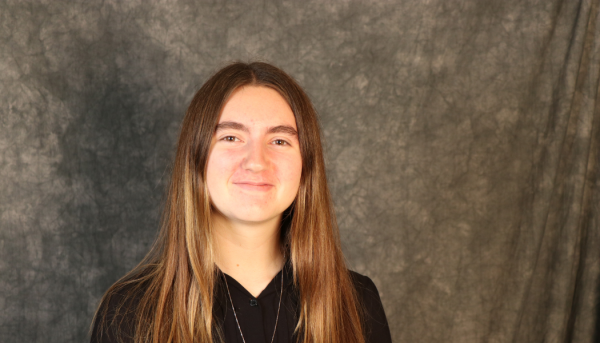
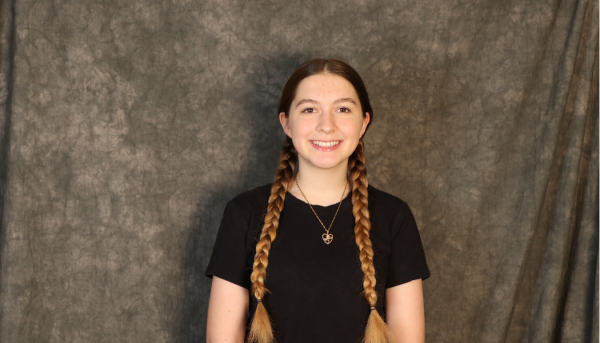
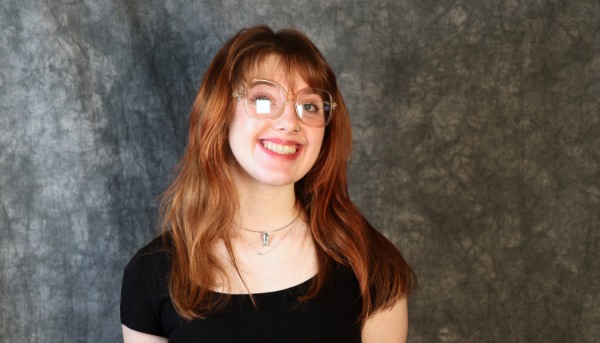
For most, proximity to death is something to be avoided whenever possible, but not for senior Olive Schaub. After high school, Schaub is planning on becoming a mortician, someone who prepares dead bodies for funerals and burial.
“My mom [inspired me], she used to be a hospice nurse and she would wake me up at 2 am in the summer and take me on a death visit. We would drive for hours and talk about her work and life,” Schaub said.
After first learning about the mortician career through media, Schaub set her mind to becoming one in seventh grade. She enjoys learning more about the practice and its development over time.
“I’m interested in the history of mortuary science. There are so many cultures throughout time that have had to create a practice of laying their dead to rest, whether it be mummification, burial, or cremation,” Schaub said.
History teacher Thomas Sheppard has known Schaub for three years. In that time he has gotten to know her well and see her grow in her confidence and creativity.
“I think she’s well suited in choosing mortuary science because she has the empathy, care, and respect needed to work with people after death. She will also be able to use her creativity in a professional manner as a mortician,” Sheppard said.
Sheppard hopes to impart Schaub with valuable advice that she will be able to remember while working towards her career goals.
“Don’t stress about little mistakes and errors that will inevitably happen. It takes time to become great at what you do. Also, don’t forget that a mortician plays a critical role in the first scene of The Godfather,” Sheppard said.
Schaub’s close friend since freshman year, Gray Romel, describes Schaub as a creative and kind person, and is excited to see what she does with her life.
“She’s really considerate, she’s really nice. She’s really appreciative of people’s talents and stuff. […] She’d be dealing with death and families that are grieving, and I think that would help her be good with people,” Romel said.
Though often dismissed as creepy or sad, mortuary work holds the great importance of bringing comfort to bereaved families, and giving dignity to the dead in their final moments before burial.
“You have to know how to work with not only dead people but living ones, too. The families are just as important as the funeral proceedings, talking to families in a very sensitive time, and knowing how to deal with all types of grief,” Schaub said.
It takes a special type of person to work with the dead, but there are very few people entering the field on their own, as many new mortitans come from families that already work in the funeral industry; but Schaub feels called to the practice, and hopes to help people during the hardest chapters of their lives.
“I want to be a mortician to help people and their families. The number of morticians has been decreasing in the last decade, and I want to be there for families and the deceased to let them rest the way they please,” Schaub said.