
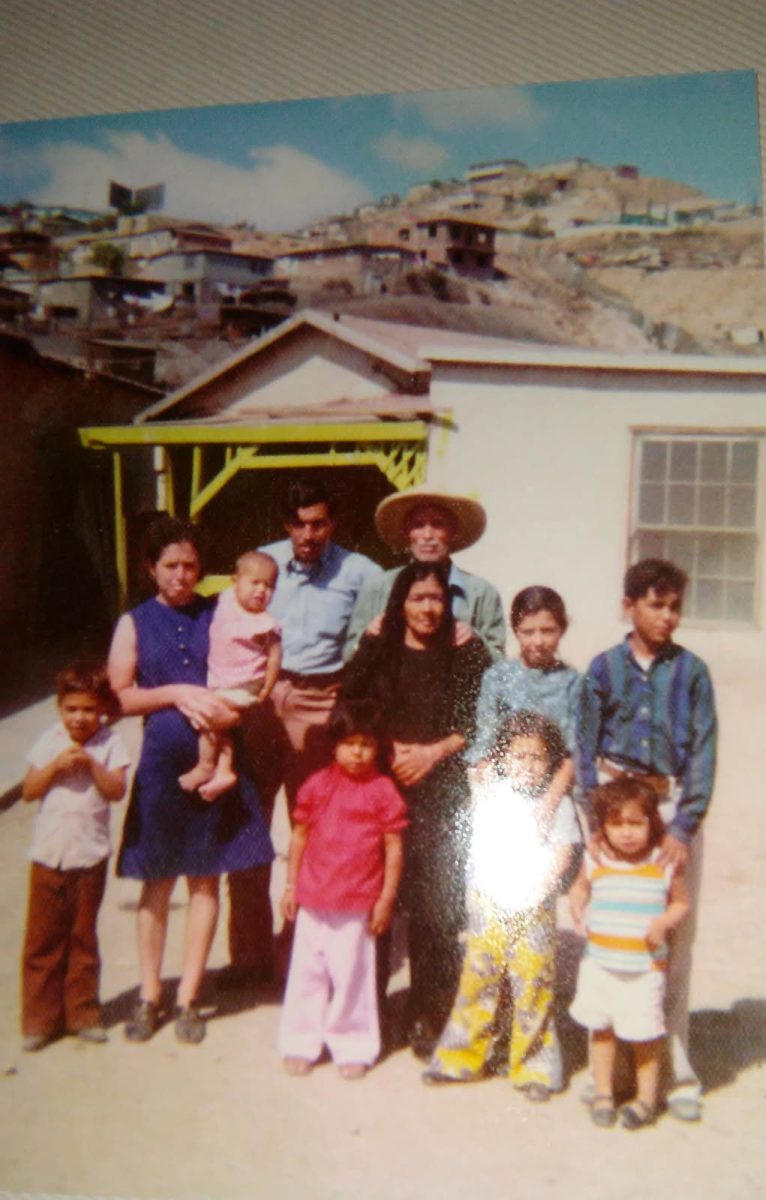
Only ten years ago, sitting president Donald Trump openly admitted his belief that, “When Mexico sends its people, they’re not sending their best,” and although he finished that quote with a half-hearted statement about some of them being good people, hearing that quote changed how I felt about my Mexican heritage. I’m Mexican, technically half-Mexican and half-white. My Latino heritage comes from my mother’s side of the family. My mother, along with her parents and siblings, immigrated to the United States over 40 years ago, and by 1986, they were legalized under Ronald Reagan’s Immigration Reform and Control Act. However, my mother was not a citizen until she became a legal adult; she waited over four years until her parents were done raising their children to step into an American identity with them.
I was around 12 when I had heard what Trump had said about Mexicans—my family: my cousins, aunts, uncles, and my mother. Although I had never agreed with Trump (and never will), there was a time where I was ashamed of being Mexican. I hated that my grandparents, Papa Nacho and Mama Lupita, barely spoke English. My mother had to be the translator for servers, bank tellers, and cashiers, and I had to sit there watching as these people thought they were idiots. I resented my grandma; she was overinvolved, spending her time trying to get me to spend time with her. One of my most vivid memories was when I was 8, and I made a list in my head, cruelly ranking all my grandparents. And because I was ashamed of their blatant immigrant status, they were last. I, in all my childish naivety, told my mother so; I don’t know if she even remembers, but I do.
By the time Covid hit, and my frontal lobe had actually begun to be used, my opinions about my heritage began to change. My previous embarrassment for my Mexican culture had been stripped bare and turned into love. If anything, I had stopped wishing to be 100 percent white like my father, but even more Mexican than I already was. The years I had spent silently begging for my grandparents to start speaking perfect English led to me wishing I was better at Spanish. I think the change occurred partly because of their sudden absence in my life; I had moved from Grand Rapids, now only visiting their small ethnic enclave a few times a year; a stark difference from the near daily visits with them when I lived down-state. With less family by me, I felt lost. I wasn’t Mexican enough, but it also felt like I wasn’t able to fit into the homogenous caucasian culture of Traverse City.
As time passed, I did find more of myself in my mixed heritage. I talked to my grandma on the phone, I learned her recipes, and I even went to Mexico (even if it was over three hours from where my mother grew up). However, the political climate began to shift; people began to blame immigrants for things that had always occurred; along with conveniently ignoring that America was built on immigrants. It was a core part of Trump’s campaign, despite the fact that his grandfather, two of his wives and his own mother were immigrants. I guess none of that matters though if you’re from Europe and not from a country of drug-pushing rapists. Trump said that Mexico doesn’t bring in their best, and of course, there are always criminals from every ethnicity; but you’d never hear Trump talk about how over 85 percent of mass shooters are born on pure American soil. With his words, he forgets my Tia Irema with the State of Michigan Education Department; my Mama Lupita, a housekeeper at a hospital; my own mother, Angelica Lopez-Hoag, the best business woman I know; and the millions of other Mexican-Americans that are the ones that actually make America great.


Irma Lopez Barajas • Nov 7, 2025 at 12:28 pm
Amazing young lady and beautiful article. A true leader in the making. This gives my hope for the future.