Honestly, not a day goes by where I am not reminded of conservative agitator Charlie Kirk. I never agreed with his politics, and likely never will. So then why am I constantly reminded of him? With no question about it, it’s because of the internet.
Kirk was a conservative media commentator and founder of Turning Point USA (TPUSA). Although well-loved by the conservative movement, he often garnered criticism for his statements. He advocated for a return to traditional gender roles, stating in 2025 “that there is a window where you primarily should pursue marriage and having children.” In addition to that, he espoused anti-abortion values, once comparing it to the Holocaust. His views remained solidly right-wing for all of his life. Among his general commentary on podcasts and web shows, Kirk was well known for his debates against college students, where his supporters would often rally against whoever he was debating against. However, his debates at universities would lead to his death, as on September 10, 2025, he was shot and killed at Utah Valley University during a debate. His death led to widespread mourning among conservative communities, but also to a viral meme genre.
Kirk’s death has led to several derivative memes surrounding him, including songs and satirical “ship” edits. The song We Are Charlie Kirk was created by AI-artist Spalexma, originally as a way to honor Kirk’s legacy; however, it quickly became a way to satirize both Kirk and any sort of popular culture. The “ship” edits often parody a relationship between Kirk and certain figures such as President Donald Trump and sex-trafficker Jeffery Epstein. Although these “memes” often involved Kirk, they rarely involved anyone outside of the conservative political sphere, but a more famous meme trend also rose from his death, referred to as Kirkification.
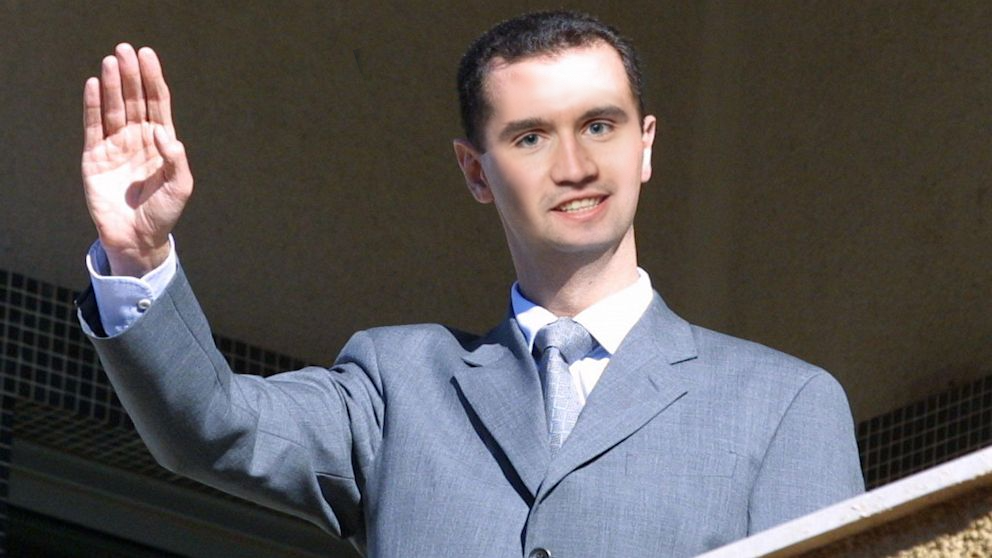
Kirkification, according to Wiktionary, means that one edits an image to swap the subject’s face with Kirk. This immediately rose to prominence after his death; however, one of the first Kirkifications occurred in 2018 by an X user depicting Charlie Kirk as a turkey. These photos often superimpose Kirk’s face with viral figures or images that would have gone against what Kirk believed; for example, singer Addision Rae, Gracie Abrams, or former Syrian President Bashar al-Assad. Kirkification images are often synchronized with music or other viral memes.
Kirkification has gone viral from both sides of the political spectrum, but those from the right often feel offended by the images. Those against Kirkification often believe that they make fun of a senseless death and that they spew hateful rhetoric. However, when remembering Kirk’s legacy, others may consider the things he said as offensive and harmful, and thus they feel the memes are justified.
Memes surrounding Kirk and his appearance, beliefs and life have existed far before his death (as stated with the first Kirkification being nearly 8 years before Kirk died). Why does death suddenly excuse the actions that they had in life? How is it possible that someone is suddenly absolved of their controversy the second their brain activity stops? Kirk’s actions still continue to bring harm to some people; his most controversial statements are used to bring hate to marginalized communities. So clearly, someone superimposing his face onto a pop star is one of the least problematic ways that someone could make a meme out of Kirk. It must be taken into consideration that the right often makes memes out of what the left considers tragedies as well; for example, George Droid, a robot photoshop of police brutality victim George Floyd.
Kirk’s legacy has clearly had an impact on both political spheres and pop culture. Despite the fact that Kirkification and other memes have generated controversy, it is wise to acknowledge how Kirkification and other people making memes out of tragedy have existed since the age of the internet. These memes, no matter how they may appear to others, will not go away. Although conservatives may want to limit these memes, it is crucial for them to remember how by limiting these memes, their beloved first amendment right would be limited.